Selah
(2026)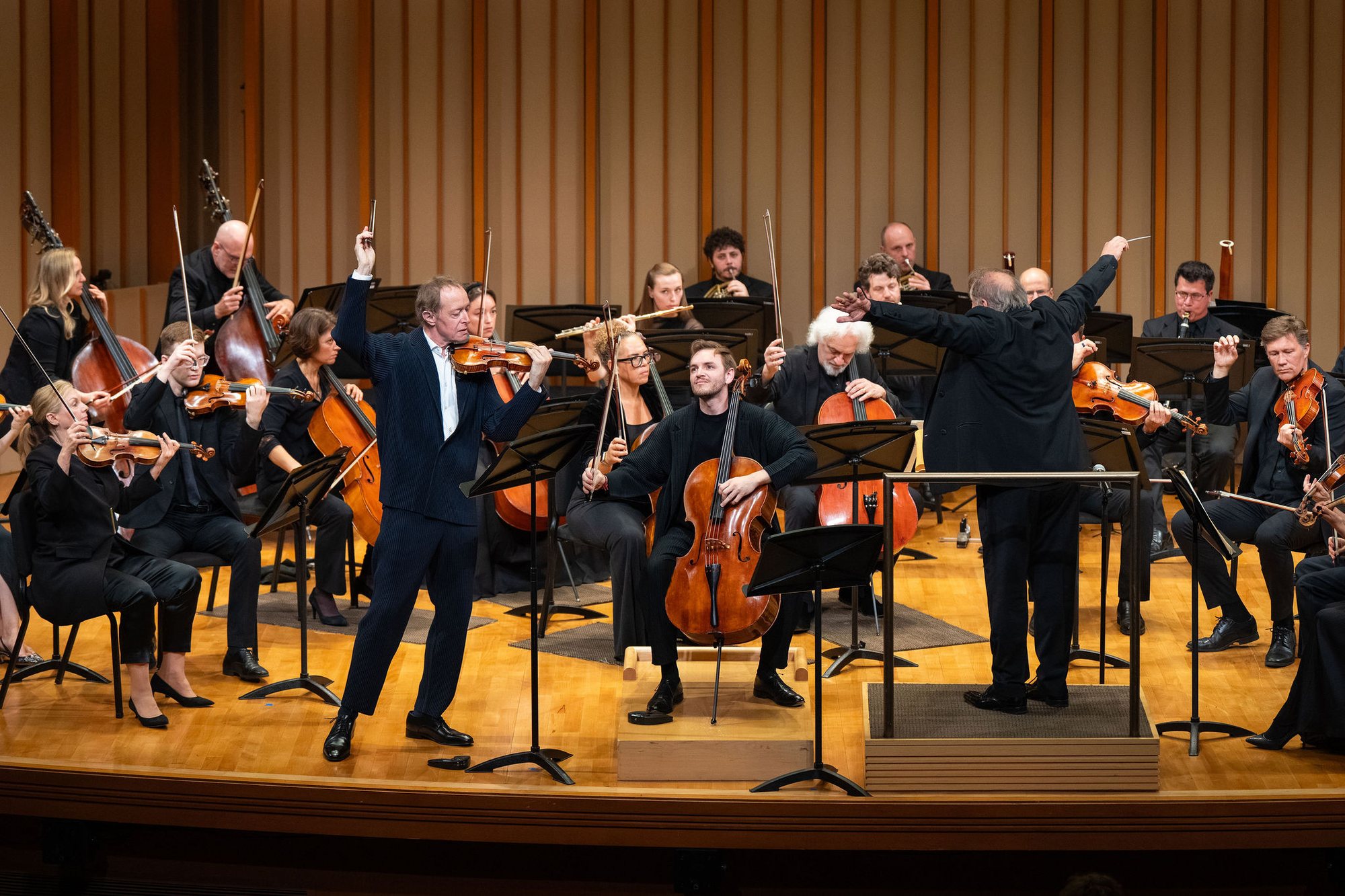
Orchestration
2(2pic).0.2.0-2.2.0.0-1perc(crot, glsp, guiro, vib)-hp.str(5.4.4.4.2 min)
Duration
ca. 23 minutes
Commissioned by/Premiere
Commissioned by the Los Angeles Chamber Orchestra and the Saint Paul Chamber Orchestra, with the generous support from Evelyn & Stephen Block, Raulee Marcus, Nancy & Barry Sanders, and Abby Sher.
May 14, 16, and 17, 2026
Anthony Marwood, violin
Coleman Itzkoff, cello
Jaime Martín, conductor
Score
Score and parts are available from Schott Music.
Note
Selah appears throughout the Book of Psalms, its meaning still uncertain after thousands of years—perhaps a pause, a breath, a moment for reflection. In this concerto, that uncertainty is the point: what happens in the silence after a melody, in the space between statement and response.
The piece grows from my earlier work Canto Selah, a setting of the poem “Canto Selah” by G.C. Waldrep, in which a vocalist engages in dialogue with pre-recorded versions of herself—a mirror made of sound. Here that conversation becomes physical: two soloists completing one another’s phrases, splitting a single melodic line between two voices, reflecting the same material at different angles. The mirror images that once spun out onto electronics now refract across the orchestra—conceived and inspired by the electronic sounds that often feature in my work, but entirely acoustic. A four-note cell from the earlier piece threads through nearly every movement, but it’s what surrounds it that shapes the concerto—the silence between iterations, the way each repetition lands differently.
The concerto opens with a scurrying exchange between the soloists, interrupted by a breath of air in the trumpet—melody, then silence, selah as a physical gesture—before the full orchestra sets into anxious, Morse-code motion. The second movement reveals the theme in full: a longing melody, played by both soloists a seventh apart, descending, gradually smeared through the orchestra—as the texture dissolves, the soloists break into bird-like calls, fragments of the melody ascending—before the movement settles into stillness. The third movement stands apart—the only one to abandon the four-note cell entirely, built instead on open-fifth pizzicatos and major-minor harmonies. The fourth returns with the motive now as relentless ostinato, hockets and snap pizzicatos, before cutting off sharply.
The finale arrives without warning, restating earlier themes—but now the silence that followed each melody is filled. The solo strings bow between sul ponticello and sul tasto while whistling, drawing out the overtones of the open strings, the selah no longer empty but alive. Note by note, the soloists lead us forward until the longing theme settles on top of the rhythmic open fifths from the third movement—something that once felt out of reach finally coming to rest. Layer by layer the theme accumulates, and what had been longing resolves into joy.